
Trickle-Down Economics
The pseudo-economics liberalism

Economic history has been one of a funny kind involving theories that have not existed as well. One of those is Trickle-down economics. The hypothesis, known as trickle-down theory or trickle-down economics, is that giving the wealthy more money or lowering their taxes will indirectly benefit the poor, enhancing their standard of life. However, this perspective is faulty. Trickle-down theory is a phrase used by detractors of economic liberalism to mock opposing perspectives and avoid intense debate. It operates as a straw-man bias, misrepresenting opponents' arguments and instilling false ideas to disprove them rather than engaging their genuine perspective.
While having a conversation very recently, the point was put forward that how only a handful of people pay taxes in countries such as India. As income tax is 40% applied to only 4 % of the population, implying the majority of the population earns less than the taxable income highlighting the differences between the rich and the poor. According to the Economic Survey 2017-18, only 59 million people pay income tax in a country where the population is 1,441,719,852 as of 2024. Experts estimate that the actual income tax base, i.e. the number of people who should be paying income tax, is around 90 million or 34% of the non-agricultural workforce. So only 4.5 % of the population’s wealth is paying for the most amenities of the country considering the high corruption rate and constant currency changes completely disrupting the economic balance.
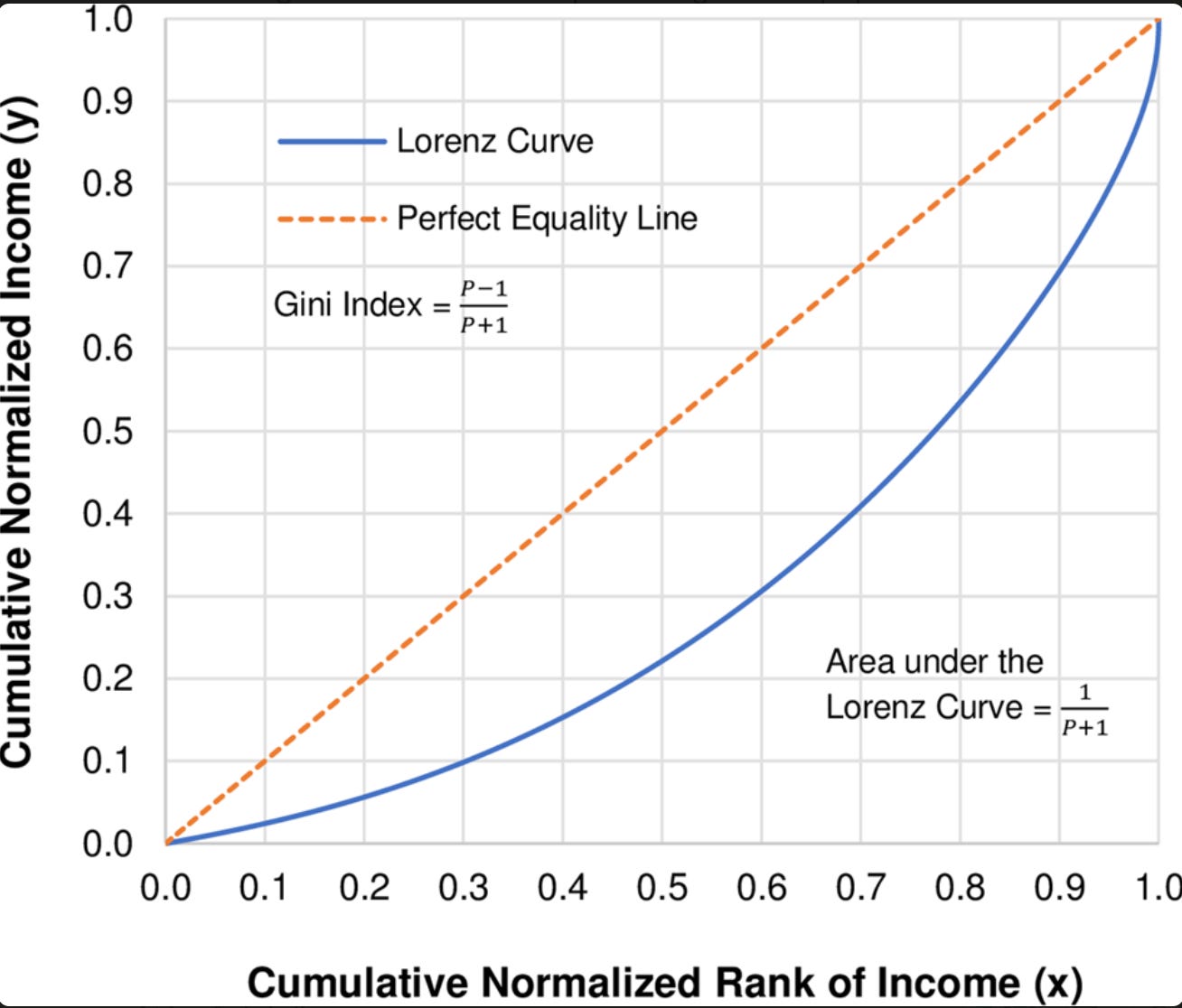
Considering that trickle-down theory is just a populist belief, and not an actual theory then how is the high poverty justifiable in such a huge country? The outliers and omitted variables here can’t be emphasized enough. There are many factors considered in measuring the wealth distribution of the country, other than just the taxes, such as Income inequality, Social mobility, measure of assets, economic shocks, and more. (also put a graph here). This idea plotted on a graph with the cumulative percentage of total income (or wealth) on the vertical axis against the cumulative percentage of the population on the horizontal axis is known as the Lorenz curve.
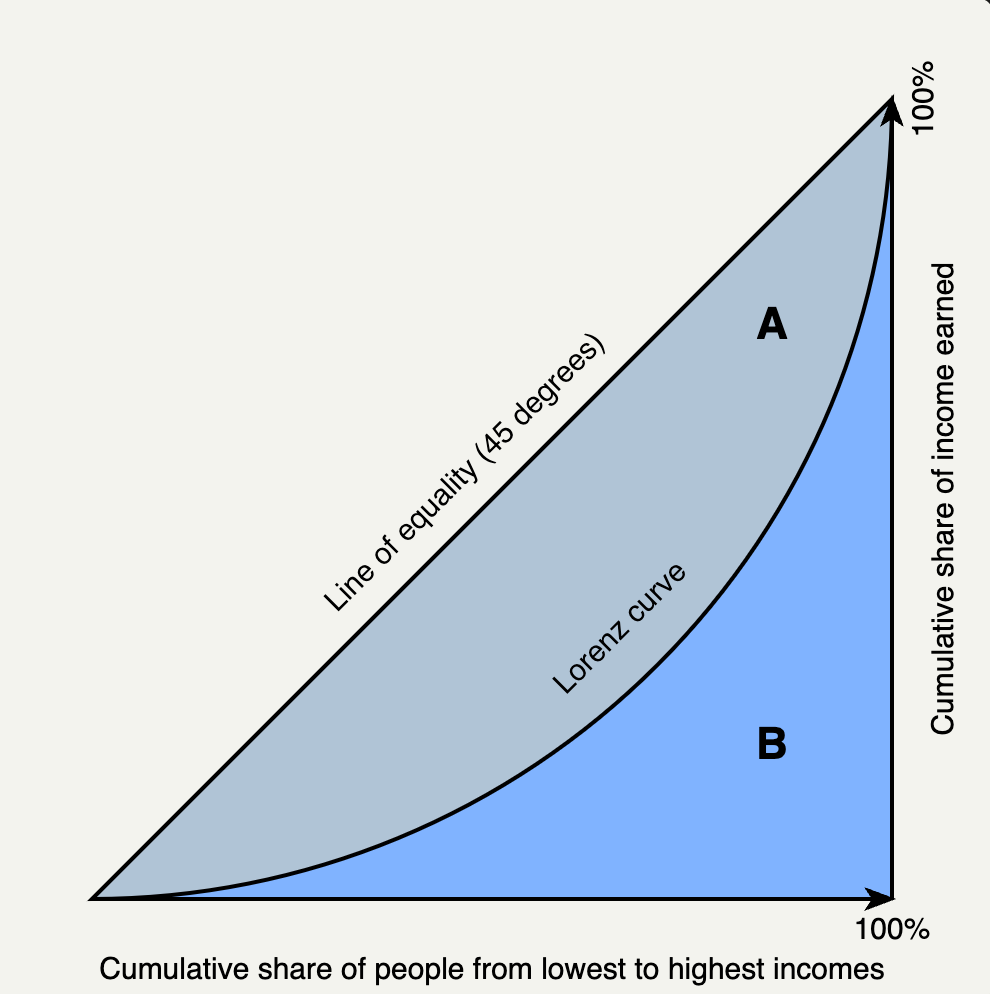
If there was perfect equality in the distribution of income or wealth, the Lorenz curve would be a straight 45-degree line, known as the line of perfect equality. The further the Lorenz curve is from this line of perfect equality, the more unequal the distribution of income or wealth. The area between the Lorenz curve and the line of perfect equality is used to calculate the Gini coefficient, which is a summary measure of inequality.
Well it is rather true that the taxes will be extracted in some way if the public goods are freely available, for instance, In Luxembourg, most products sold had high taxes after the public transportation was available at no cost to the public.
Relying on the idea that giving more to the rich will increase the tax accumulation is flawed in itself, as it is promoting wealth centralization because even after taxes are paid the large sum of money will still be accumulated with the top few percent of the population. Continuing with the most used quote in these blogs of mine, “Somebody’s income is someone else’s expenditure”, the money has to be taken away from the tax-paying population to settle this combination of trickling down the wealth as money is circulated in the economy and not created.
It is not the market economy that serves the rich, but consumers. Proponents of this system better serve customers, use resources more efficiently, and do not lament the loss of market share to companies due to competition from many smaller innovators. Economic liberalization is not about redistributing wealth among different groups; It is about removing barriers that prevent people from accessing and spending money according to their priorities.
The taxes are not remittances. Money rightfully belongs to those who earned it, and the tax cuts are intended to allow individuals to keep more of their income. Any lingering notion of catering only to the rich can be dispelled with this quote from Ludwig von Mises: “The advocates of free enterprise and free competition do not welcome modernity after the welfare of the rich.” The way to achieve this objective is by ensuring that the economy adequately meets the needs of consumers.
Anyone advocating for trickling down the wealth by increasing the tax cuts from the riches ignores many factors such as complex socioeconomic factors that influence the distribution of wealth and the ability of tax cuts to generate broad-based economic growth.
The heterogeneity of human capital, the self-selectivity of capital accumulation, the spread of technological change, and the monopolistic nature of international trade, all of which can lead to polarization rather than equitable distribution, and the nonhomogeneity of human needs and the high cost of resource transfer.
The imperfect credit market can lead to endogenous inequality.
External constraints like technological benefits, the economic system, and natural endowments.
Upholding the trickling down is associated with the idea of a hierarchal society with roles set for generations as well. It would be hypocritical to assume that wealth is not carried through generations by riches, but this straw-man theory is itself promoting this idea, and this will not create economic freedom in any stance as the wealth accumulation will carry on. Everyone possesses the opportunity to prosper, and one's current economic status doesn't dictate their future prospects. The progress in creation and innovation is directed towards an uncertain future, i.e., emerging entrepreneurs.
Talking about this idea on a macro scale and taking the GDP of the manufacturing and export-based economies such as China into account, supports the idea that the market governs itself to meet the demands of the consumer, and balance the supply.
The fixed amount of wealth distribution proponents emphasize the class-warfare rather than economic freedom. Wealth is not static; one person's rise to prosperity does not automatically translate into another's fall from grace. In an unrestricted market, the profit generated is based on the satisfaction scale of consumer needs. Earned profit is an indication of creating new value for customers and of skillfully employing scarce resources.
Market-driven systems excel at adapting to what customers want. They offer a wide variety of products that cater to diverse needs. However, critics argue that businesses sometimes prioritize profit over employee well-being. This can manifest in reduced benefits or lower wages than what the market could potentially support. While employers aim to control costs, the notion of complete control over wages is inaccurate. Minimum wage laws establish a baseline, and competition for skilled workers can drive wages upwards.
Global wages have indeed increased over time, suggesting market forces can incentivize fair compensation. The ideal system likely lies somewhere between purely market-driven and rigid bureaucratic control. Finding the balance ensures businesses have the flexibility to innovate while protecting workers' rights and ensuring fair wages. The bigger concern in today’s job market is rather automation than wages; wages have been the preliminary concern for decades. Creative destruction may give rise to the removal of certain jobs at first, but it brings the hope of creating better and more jobs in the very near future.
Wealth distribution is supply-demand itself. The more the market players effectively meet the demands of the consumers by efficiently allocating the limited amount of resources currently available, the more value they produce for the market, and that increases the worth of the product in turn increasing the monetary value of the producers. Market is run by the invisible hand, and only considers the value created rather than populist fallacies and their proponents prefixing their beliefs with warfare.
"Anyone advocating for trickling down the wealth by increasing the tax cuts from the riches ignores many factors such as complex socioeconomic factors that influence the distribution of wealth and the ability of tax cuts to generate broad-based economic growth."
I have a joke about trickle down economics... but unfortunately, I don't think 90% of people would get it.